
Pramanique Fintech Private Limited
presents
PRAMAAN OS™
Proof
Control
Growth
Trust infrastructure for India’s financial ecosystem.
For Chartered Accountants. For the businesses they serve. For the discipline between.
India’s financial economy has scaled without the infrastructure to verify itself. This changes that.
Public Introduction
PRAMAAN OS™
27 July 2026
—
Days
—
Hours
—
Minutes
Some launches reveal a product. This one reveals an argument.
The Name
प्रमाण
Pramāṇa · Sanskrit
Proof. Substantiation. Evidence. Confidence.
In Indian philosophical tradition, pramaan is the means by which knowledge is established — the discipline that turns assertion into truth.
We took the word seriously. We named the company for it. We named the product for it. Everything we build answers to it.
The Work
Technology infrastructure for regulated, evidence-driven finance.
PRAMAAN OS™ is built for Chartered Accountants and the businesses they serve — small, medium, and large. Its work spans three connected domains, each grounded in measurable behaviour rather than declared intent.
01
Regulatory
Technology
Technology
Software systems that translate India’s evolving compliance landscape into operational clarity for the institutions and professionals who carry the load.
02
Analytical Models & Scoring
Quantitative frameworks that surface signal from regulated, observed behaviour — designed for auditability, defensibility, and use in financial decisioning.
03
Fintech
Infrastructure
Infrastructure
The connective layer between compliance, analytics, and access to capital — built to operate at the scale of India’s emerging financial economy.
For twenty years, financial software has asked you to trust it. We are not asking.
90
Patents Pending
We did not announce a roadmap.
We filed one.
We filed one.
Each filing predates this page.
Each filing predates this product.
Each filing predates its claim.
The Work Behind It
Nearly ninety filings. One discipline.
Nearly ninety patent applications are filed or in active preparation, spanning the methodologies, system architectures, and computational disciplines that underpin PRAMAAN OS™. Most of this body of work is not yet public, and will remain so until each filing is appropriately disclosed.
We chose to file before we announced — the discipline is intentional. Claims become facts only after they are tested, and testing takes years. Pramaan begins at the patent office.
Nine Disciplines
Principles
Four commitments. Every decision.
- 01 Verifiability over claims.
- 02 Restraint over noise.
- 03 Indian context, global craft.
- 04 Long arcs over short cycles.
Structure
Built at Bloom AI Labs.
PRAMAAN OS™ was built at Bloom AI Labs — the research and engineering studio where Pramanique Fintech Private Limited operates — over years of rigour and testing. The discipline is intentional: long arcs, deep work, nothing shipped before it survives its own scrutiny.
The structure provides operating independence, shared design and engineering craft, and the patient conviction that infrastructure of this kind requires.
The People
The hands behind the work.
PRAMAAN OS™ is built by a team that chose this discipline before there was anything to show for it. Four founders. A scoped executive branch — some seats filled, others held open with intent. A growing engineering team behind the work. Years of preparation behind each name.
Founders
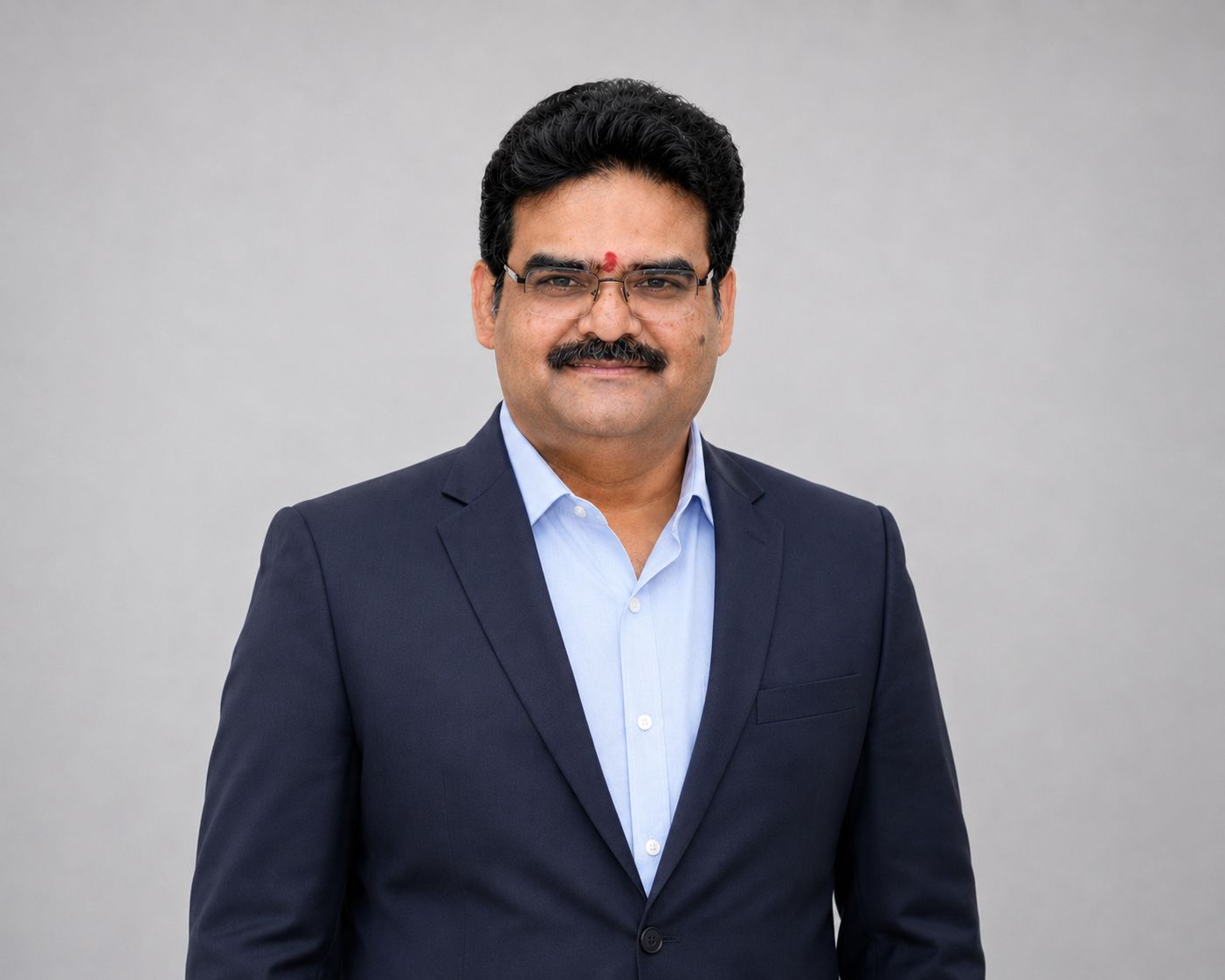
Dinakar Lanka
Co-Founder & Chief Executive Officer
Some men measure their lives by what they build. Dinakar Lanka has measured his by what India still needs built — and where institutions, systems, and access do not yet adequately exist.
A Fellow Chartered Accountant by training, he began his professional journey within the financial and institutional frameworks that underpin India’s businesses, professionals, and wider economy. Those years offered him a close understanding of how regulation, finance, governance, and compliance operate in practice — and, equally importantly, where they fall short for ordinary citizens and emerging enterprises.
More than a decade ago, at a stage when many contemporaries were focused on expanding private practices and commercial careers, he chose a different path. He stepped away from conventional professional practice and moved into the more complex and demanding sphere of public policy and governance — working at the intersection where legislation meets implementation, where national schemes meet district administration, and where economic policy ultimately succeeds or fails in the daily lives of people.
That transition provided him with an unusually grounded perspective on the structural realities shaping the Indian economy: the relationship between capital and access, regulation and entrepreneurship, institutional intent and execution, and the practical challenges faced by small businesses and local communities beyond policy documents and economic theory.
Today, within the Government of Andhra Pradesh, he serves as Chairman of the Twenty Points Programme (Viksit Bharath — Swarna Andhra Pradesh) Implementation across all the districts of the state and other states in India, overseeing the alignment and monitoring of national and state development initiatives at the grassroots level. The role places him in direct engagement with the realities of implementation — observing, district by district, how public systems translate policy intent into measurable social and economic outcomes.
Pramanique represents the third chapter of that journey. The first chapter was about understanding institutions from within. The second was about understanding where systems fail and why. The third is about building what should have existed in the first place.

Dr. Anupam Raina
Co-Founder & Inventor
Some inventors begin with a problem. Anupam Raina began with a question that took twenty-five years to fully form: what does it take, in practice, for a system to be trustworthy?
Her first chapter was inside the operations and quality functions of organizations including Pfizer, Johnson & Johnson, and Wrigley-Mars — environments where precision, process, and people had to align with such exactness that failure was never abstract and never private. In pharma, a system that almost works is a system that has already failed. She spent the better part of two decades inside that discipline, learning that durable trust is almost never in what gets declared — it is in what gets demonstrated, line by line, audit by audit, year after year.
She carried that rigour into the academy. A Doctor of Business Administration and MBA by training — alongside further qualifications and affiliations earned across her career — she now teaches leadership, operations, supply chain, and project management at the university level. Not through textbook frameworks, but through real cases, messy problems, and the kind of reasoning that holds up outside the classroom.
PRAMAAN OS™ is what happens when that lifetime of watching gets converted into an act of building. The conviction is the same one she has tested in every regulated industry she has worked inside: that trust is never declared, only demonstrated, and that the systems which earn it are designed for verifiability from the first line of code.

Avi Raina
Co-Founder, Systems Architect & Chief Mentor
Some builders work for the launch. Avi Raina works for the third year — for the audit no one anticipated, the edge case no one tested, the moment when a system is asked to do what it was claimed to do, and either holds or doesn’t.
Across multiple ventures, his work has been consistently characterized by a refusal of the shortcut. He notices where assumptions have quietly replaced thinking. He rebuilds from underneath rather than patching from above. The result is rarely visible at the moment of launch — it becomes visible later, in the years when the system is still standing while others have quietly collapsed. This is the discipline that produces infrastructure rather than software.
At Pramanique, this is the discipline shaping the architecture of PRAMAAN OS™. The compliance dependency graph, the behavioural trust signals, the auditability mechanics — each was designed for the harder question, not the easier one. Each was built with the understanding that trust infrastructure earns its place not in the demo room but in the fifth audit, the third year, the moment a regulator asks for proof and the system simply hands it over.
The work is quieter than most of what gets announced in fintech. Most readers of this page will never see most of it. But every claim PRAMAAN OS™ makes about itself — about being verifiable, durable, regulator-grade — is a claim Avi has spent his career insisting is non-negotiable. The product carries that insistence, because he carries that insistence.
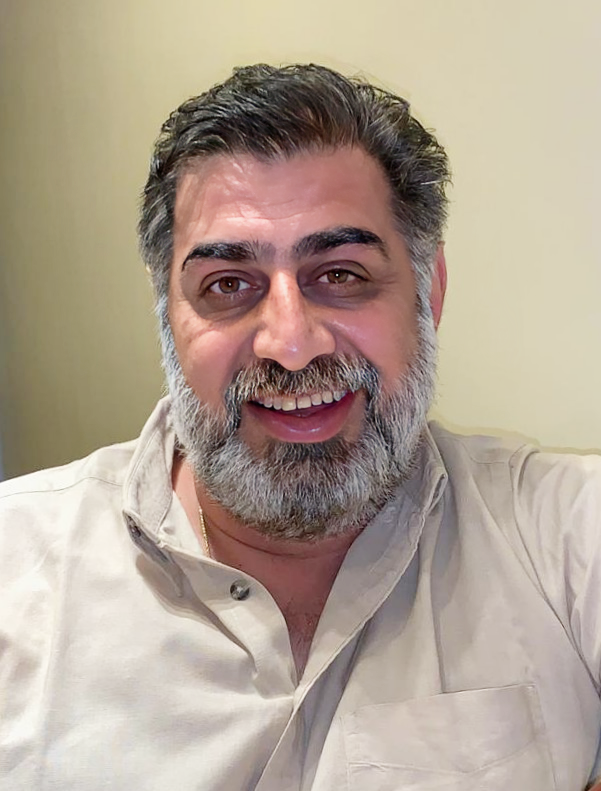
Ashish Seli
Co-Founder, Chief Marketing Officer & Chief Operating Officer
Some marketers chase attention. Ashish Seli has spent his career studying what makes it last.
He built his career leading marketing for one of India’s major newspaper and media organizations — a role that meant carrying a national brand across audiences, formats, and decades of media reality that has shifted underneath every assumption it once rested on. Print to digital. Broadsheet to feed. Trust earned on Sunday mornings now earned, lost, and re-earned every six seconds. The experience taught him what most marketers learn too late, or never: that durable attention is earned slowly, that audiences forgive almost anything except being underestimated, and that the brands which survive a decade are the brands which resisted the easy story when it would have worked.
He is also an entrepreneur by temperament — the kind who finds the harder, slower work more interesting than the obvious win, and who has, at the points in his career when something needed to be built rather than managed, built it. He brings to Pramanique the rare instinct of a marketer who has watched an entire industry change underneath him without losing the discipline of what he believes a brand actually is.
At PRAMAAN OS™, this is exactly the discipline the product needs. Pramanique is harder to explain than most fintech and earns trust more slowly than most fintech. Ashish’s craft is making that slowness legible — turning the depth of the work into the reason people pay attention, and the discipline of the build into the brand itself. In addition, he also carries the operational mandate as Chief Operating Officer — translating brand commitments into the day-to-day execution rhythm of a company in formation.
Executive Branch
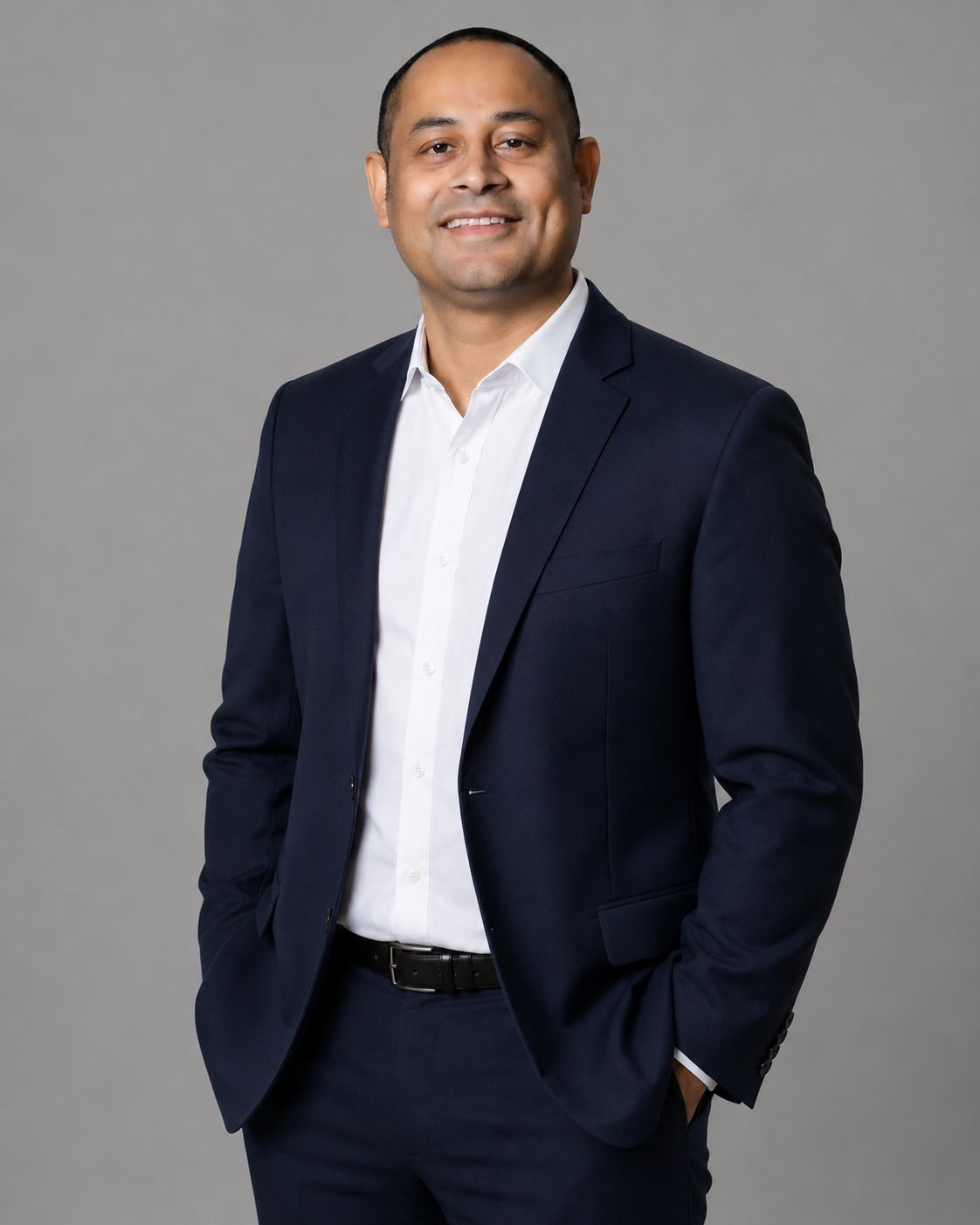
Vaibhav Pandey
Chief Technology Officer
Vaibhav Pandey is the kind of technologist who has spent his career inside the systems most people only encounter when they fail. Over two decades in fintech and trade technology — with extended work across major Australian financial institutions — he has built real-time transaction engines, AML and fraud-detection platforms, and behavioural analytics systems that operate at the scale where milliseconds and false positives both have consequences.
A parallel two decades of work in enterprise resource planning and adjacent operational systems has given him an unusually wide view of how the financial, regulatory, and operational layers of a business actually interlock. Based in Sydney, he brings that perspective to a sovereign-India infrastructure build from outside the assumptions that constrain it locally.
At Pramanique, he is the technical leadership behind PRAMAAN OS™ — translating long-arc architecture decisions into systems that will be asked, in time, to do exactly what they claim.

Shweta Mishra
Chief Projects Officer
Shweta Mishra is a transformation leader who has spent two decades inside the kind of programmes that decide whether large institutions actually change or only announce that they have. Across major Australian organisations including Commonwealth Bank, Westpac, and Allianz, she has led enterprise-wide reviews, HRIS implementations (Workday, PeopleSoft, Oracle), governance uplifts, and workforce-strategy initiatives affecting thousands of employees — the kind of work where strategy, systems, operations, and people all have to move together or none of them moves at all.
An MBA by training, she pairs that institutional rigour with an entrepreneurial second life: founder of PetXO, a technology-enabled platform connecting pet parents, providers, and services; and a qualified clinical naturopath who built her own clinic. The combination gives her a project sensibility most operators never develop — one that holds governance, commercial pragmatism, and human outcomes in the same frame.
At Pramanique, she leads the projects function across PRAMAAN OS™ — the connective tissue between architecture, execution, and the calendar a regulated infrastructure build is ultimately measured against.
To be appointed
Chief Financial Officer
This role is filled by intention. The Chief Financial Officer at Pramanique will lead the financial architecture of a company building infrastructure for India’s trust economy — owning capital strategy, regulatory financial compliance, and the discipline of long-arc fiscal planning. We are in the process of identifying the right person.
To be appointed
Chief Compliance Officer
This role is filled by intention. The Chief Compliance Officer at Pramanique will hold the regulatory line for a product whose entire premise is the demonstrability of compliance — owning the company’s posture toward India’s evolving financial, data, and professional-services regulatory landscape. We are in the process of identifying the right person.
To be appointed
Director of Business Development
This role is filled by intention. The Director of Business Development at Pramanique will build the bridge between the product and the Chartered Accountancy profession it serves — translating long-arc infrastructure value into the durable partnerships that scale a category. We are in the process of identifying the right person.
Engineering Team
Engineer Name 1
Senior Application Developer
Leads the application development effort at Pramanique — from the trust-scoring interface to the compliance-graph data pipelines. Owns the full-stack architecture, ensures production reliability, and drives the technical decisions that keep the platform scalable and audit-grade.
Engineer Name 2
Software Quality Assurance
Owns the quality gate at Pramanique — nothing ships without passing through rigorous testing. Builds and maintains test frameworks, catches edge cases before users do, and ensures every release meets the reliability standards a regulated financial platform demands.
Engineer Name 3
CAMS — AML / KYC / Financial Crime Analyst
Certified Anti-Money Laundering Specialist protecting Pramanique’s financial integrity. Handles AML compliance, KYC verification, transaction monitoring, and fraud detection — ensuring the platform meets regulatory standards as it scales into financial infrastructure.
Engineer Name 4
Data Engineer
Builds and maintains the data pipelines that power Pramanique’s compliance analytics and behavioural trust signals. Designs ETL workflows, manages data lakes, and ensures clean, reliable data flows from regulatory and accounting integrations into the decision engine.
Engineer Name 5
IT Infrastructure & DevOps
Manages Pramanique’s cloud infrastructure, CI/CD pipelines, and server operations. Keeps production environments secure, scalable, and running at peak performance — so the team ships fast without compromising uptime or auditability.
Engineer Name 6
Client Success Lead
First point of contact for Pramanique’s Chartered Accountant firms and partner institutions. Manages onboarding and support operations, resolves issues with care, and feeds real practitioner pain points back to the product team — closing the loop between users and engineers.
Engineer Name 7
Data Analyst
Turns raw compliance and engagement data into actionable insights. Builds dashboards, tracks key metrics, and runs analyses that inform product decisions — making sure Pramanique grows with data, not guesswork.
Engineer Name 8
UI / UX Designer
Designs the interfaces and experiences users interact with across Pramanique’s platform. From wireframes to polished screens, ensures every touchpoint feels intuitive, accessible, and aligned with the evidence-grade brand identity.
Engineer Name 9
Backend Engineer
Develops and maintains the server-side systems that power Pramanique’s scoring engines, user accounts, and compliance APIs. Writes performant, secure code and ensures backend services handle scale without breaking a sweat.
Engineer Name 10
Application Developer Intern
Contributing to Pramanique’s frontend and application layer as part of the development team. Works across the UI, builds features end-to-end, and is actively growing into the codebase — shipping real work from day one.
Reach Us
For conversations that warrant care.
Want to be among the first to see PRAMAAN OS™ on 27 July 2026?
Select Early Access in the form below.
Select Early Access in the form below.
Registered Office
48-13-25, Flat No 401, Tulip Homes,
VMC Park Road, A.P.U.H.S,
Vijayawada - 520008,
NTR District, Andhra Pradesh, India
VMC Park Road, A.P.U.H.S,
Vijayawada - 520008,
NTR District, Andhra Pradesh, India
Email
Web
www.pramanique.com